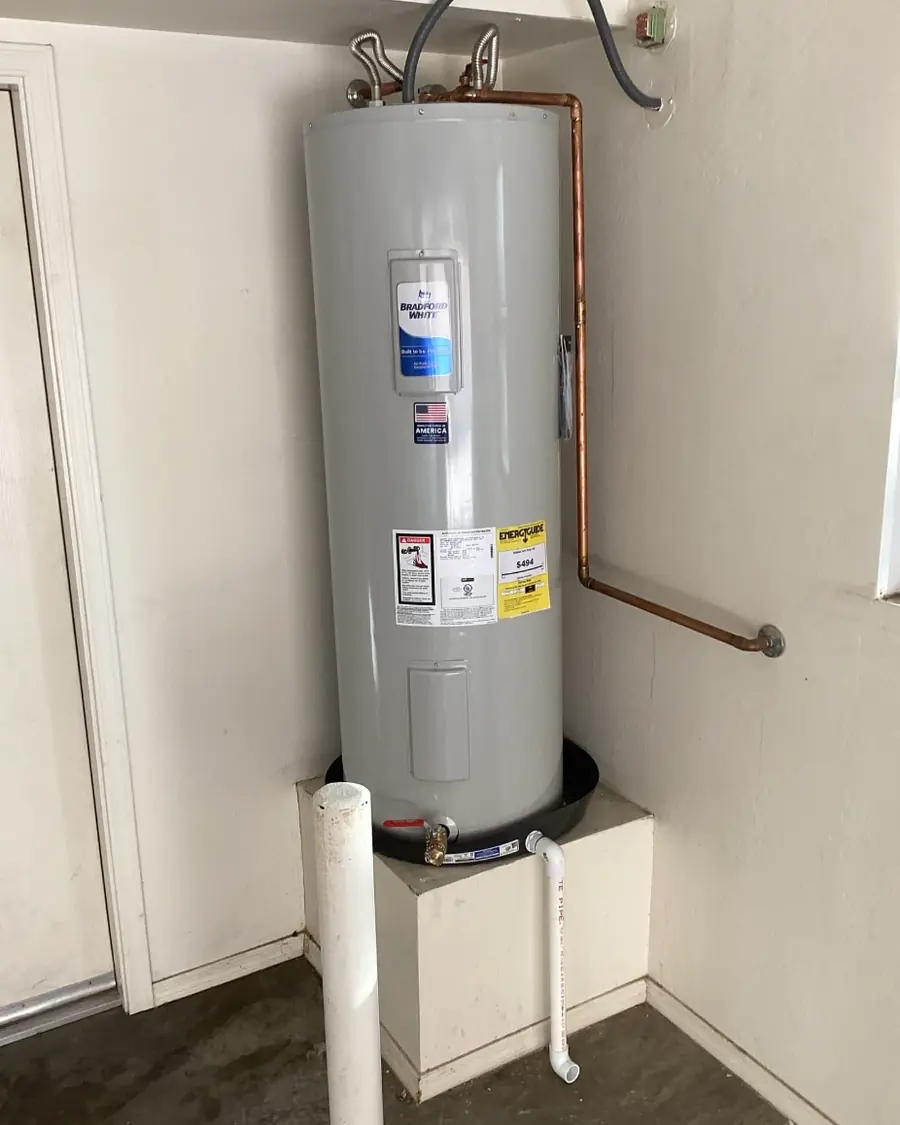
When a water heater needs replacing
Most tank water heaters in North Carolina last somewhere around 8 to 12 years. Some go longer, especially with regular flushing, and some fail early, especially on well water that has never been flushed. Age alone does not mean you need a new heater, but age combined with any of the signs below usually does.
- Water coming from the tank itself. A leak from a seam, from under the outer jacket or up through the insulation means the steel tank has rusted through. It cannot be patched, and it will not get better.
- Rusty hot water on an older tank. On a younger heater, rust often means a spent anode rod. On a tank past ten years, it usually means the inside of the tank is corroding.
- Repairs that keep adding up. A common rule of thumb: if the repair costs more than about half the price of a new heater and the unit is past the middle of its expected life, replacement is the better value.
- You keep running out of hot water. Families grow, bathrooms get added, and a tank that was fine for two people is not enough for five. That is a sizing problem, and a repair will not fix it.
- Heavy sediment that will not flush. Years of hardened scale on the bottom of an old tank make the burner or element work harder, waste energy and cause the popping and rumbling that often comes before a failure.
If you are not sure, start with a diagnosis. We test the heater first and give you a written price for the repair and the replacement side by side. Our water heater repair page covers the parts that are usually worth fixing.
Your replacement options
A replacement is a chance to put in the heater that fits how your household actually uses hot water, not simply the same label that failed. We install and replace every common type.
Gas tank water heaters
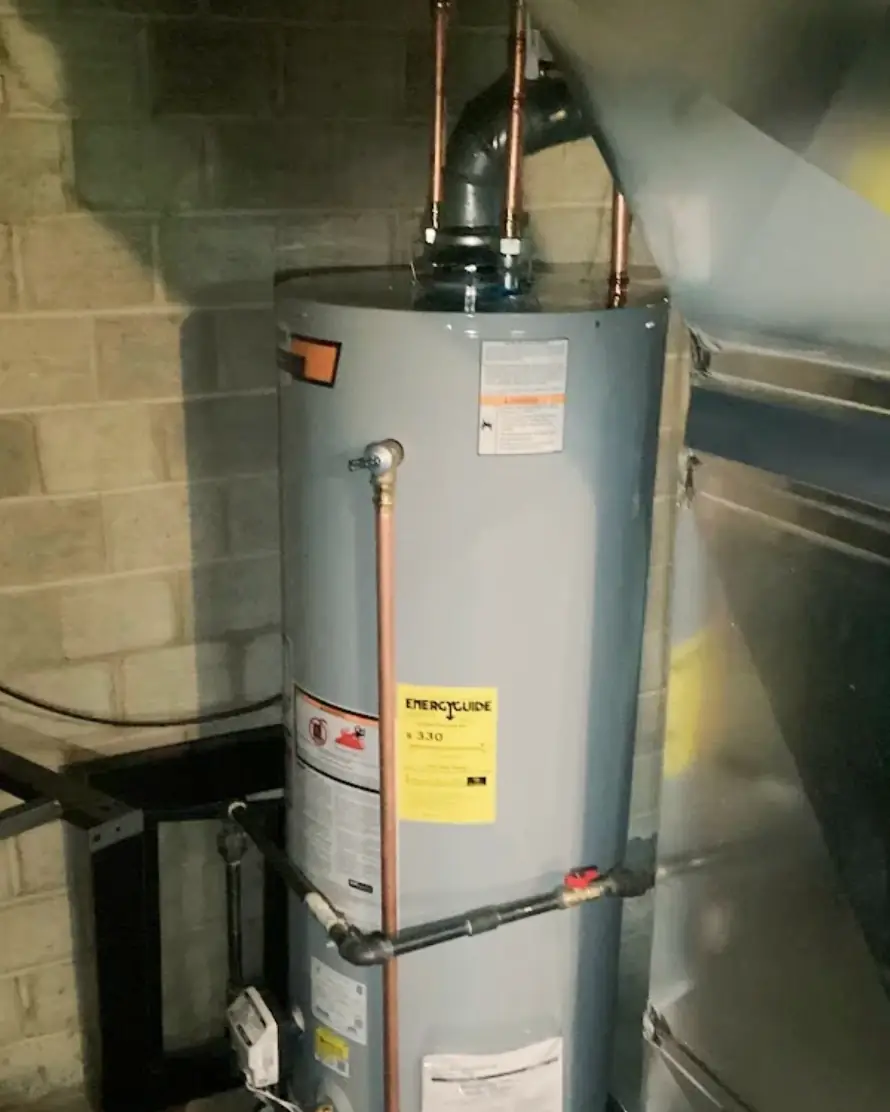
Natural gas and propane tank heaters recover quickly, which makes them a strong fit for busy households. We install atmospheric-vent models that use a metal flue and power-vent models that use a blower and can vent through a side wall when a chimney or flue is not available. Every gas install includes a check of the gas line, the shutoff, the vent connector and the combustion air around the heater.
Electric tank water heaters
Electric tanks are simple, reliable and common in homes across the Foothills that do not have gas service. We replace them in 40, 50 and larger sizes and check the wiring, breaker and disconnect as part of the job. An old electric heater wired with undersized or heat-damaged conductors gets corrected before the new unit goes in.
Hybrid heat pump water heaters
A hybrid heat pump water heater is an electric tank with a small heat pump on top that pulls heat from the surrounding air. It costs more up front than a standard electric tank but can use far less electricity to heat the same water. Hybrids need room to breathe and a place for condensate to drain, which makes basements and garages the best fit. We look at the space before recommending one.
Tankless water heaters
Tankless units heat water on demand, free up floor space and do not run out during a long shower. They cost more to install, especially when the gas line or venting needs work. Our tankless water heater installation page covers sizing and conversion in detail.
Sizing the new heater correctly
The most common replacement mistake is matching the old label without asking whether it ever worked well. We size by the household, not by the tank that is coming out.
- People and bathrooms. How many people shower in the morning, and how close together? A 40-gallon tank that handled two people may leave the fourth person in a cold shower.
- First-hour rating. This number on the label tells you how much hot water a tank can deliver in a busy hour. It matters more than gallon capacity alone, and it is why a gas tank often outperforms an electric tank of the same size.
- Big fixtures. A soaking tub, body sprays or a large shower head can empty a standard tank quickly.
- Winter water. Incoming water in January is far colder than in August, so a tank takes longer to recover in winter. A heater that barely keeps up in summer will fall behind in cold months.
- Space and access. Older homes around Hickory, Lenoir and Morganton often have heaters in crawlspaces, basements or tight closets built around a smaller tank. Newer high-efficiency units can be taller or wider, and we measure before we quote.
Sometimes the right answer is a larger tank, sometimes it is a hybrid or a tankless unit, and sometimes a family with a big home needs a second heater. We will walk you through the options and quote each one in writing.
What a proper installation includes
A water heater is a pressurized tank connected to your water supply and, on gas units, to a fuel line and venting. Installing one correctly is about the details around the heater as much as the heater itself. Current code can call for parts the original install never had, and we list them on the quote rather than adding them later.
- Permit and inspection. Replacing a water heater in most of North Carolina, including Catawba, Caldwell, Alexander and Burke Counties, generally requires a plumbing permit, and gas units usually need a gas permit as well. We handle the permit as part of the job, and the inspection is scheduled through the county inspections department.
- Temperature and pressure relief valve and discharge line. The relief line must be piped to an approved location, sized correctly and never capped or reduced.
- Thermal expansion protection. Where a check valve or pressure-reducing valve closes the plumbing system, an expansion tank absorbs the extra volume as water heats. Without one, pressure climbs and the relief valve drips.
- Drain pan. A pan with a drain line under the heater is required in many locations, especially where a leak could damage finished floors or ceilings below.
- Venting and combustion air on gas units. The correct vent connector, slope and clearances, plus a draft check once the heater is running.
- Gas connection. A shutoff valve, a sediment trap where required and a leak test on every joint.
- Electrical on electric and hybrid units. Correct breaker and wire size, a proper disconnect and tight, clean terminations.
- Shutoff valves and connectors. A working cold-water shutoff so the heater can be isolated for service later.
- Seismic or support strapping where required, and a stand or platform where the location calls for one.
What happens on installation day
- Protect the space. We lay down floor protection along the path from the door to the heater.
- Shut down and drain. Power or gas off, water off, and the old tank drained. A tank full of sediment can take a while, and we route the water to a floor drain or outside.
- Remove the old unit. Disconnect the water lines, gas or electrical and venting, then carry the old heater out.
- Set the new heater. Level it on the pan or stand, connect the water lines, relief line, expansion tank and fuel, and install any venting.
- Fill before firing. The tank is filled completely and air is bled from the lines before the burner lights or the elements get power.
- Test everything. Leak check on every connection, draft check on gas units, temperature set to a safe level and a walk-through of the controls with you.
- Haul it away. The old heater leaves with us, and we clean up the work area before we go.
A straightforward like-for-like replacement is usually finished the same day. Conversions that change fuel type, move the heater or add new venting take longer, and we will tell you what to expect up front.
What water heater replacement costs in the Hickory area
In the Hickory NC area, replacing a standard 40 or 50 gallon tank water heater typically runs about $1,400 to $2,800 installed. Where your job falls in that range depends on gas or electric, the venting, code upgrades such as an expansion tank or a new drain pan, and how hard the heater is to reach. Hybrid heat pump units usually cost more up front, and a tankless conversion commonly runs $3,500 to $6,000 or more when gas lines or venting need work.
We do not quote a replacement over the phone without seeing it, because the details around the heater change the price. What we do promise is a written, itemized quote for your exact home before any work starts. It lists the heater, labor, permit, code parts and haul-away, so the number on the paper is the number you pay.
Making the new heater last
A few simple habits add years to a tank water heater, especially on well water:
- Flush it once a year to clear sediment before it hardens.
- Check the anode rod every few years and replace it before it is used up.
- Test the relief valve once a year so it will work when it is needed.
- Keep the temperature sensible. Around 120°F is a common setting that balances comfort, scald safety and energy use.
- Keep the area clear around gas heaters so they get the combustion air they need.
Replacement and installation across the Foothills
From our base in Hickory we replace and install water heaters throughout Catawba, Caldwell, Alexander and Burke Counties, including Hickory, Conover, Newton, Claremont, Maiden, Lenoir, Granite Falls, Hudson, Sawmills, Cajah's Mountain, Taylorsville, Hiddenite, Stony Point, Bethlehem, Ellendale, Morganton, Valdese, Drexel, Hildebran and Connelly Springs. Call (828) 471-7706 or request a quote below, and see the full service area for details.