Local to Hickory
A Hickory water heater company that knows Foothills homes
Foothills Water Heaters is based in Hickory and built around a single trade. We do not paint houses, pour driveways or sell service plans for other trades. When you call, you reach people who spend every working day diagnosing, repairing and replacing water heaters, and that narrow focus is the point.
Water heaters in this part of North Carolina live a particular kind of life. Hickory's city water comes from the Catawba River system and most in-town homes are on municipal lines, while a lot of homes out in Alexander, Caldwell and Burke Counties run on private wells. Well water tends to carry more sediment and minerals, and that material settles in the bottom of a tank, insulates the water from the burner or lower element, and slowly cooks the steel. It is the reason a flush matters so much more in Taylorsville or Hudson than in a city subdivision.
Where your water comes from changes what fails first. Homes drawing treated water from Lake Hickory and Lake Rhodhiss on the Catawba River chain tend to wear out anode rods and elements at a steady, predictable pace. Wells drilled into the rocky ground around the Brushy Mountains in Alexander County can carry iron and sulfur. Sulfur is behind the rotten-egg smell, and a different anode rod often cures it without replacing the heater at all; iron is what tints hot water orange and is best handled with filtration ahead of the tank.
Winter here is another factor. The water coming into your home in January is far colder than it is in August, so a heater that seemed fine all summer can suddenly start running out halfway through a shower. That same temperature swing is why we size tankless units for the coldest month rather than the average one.
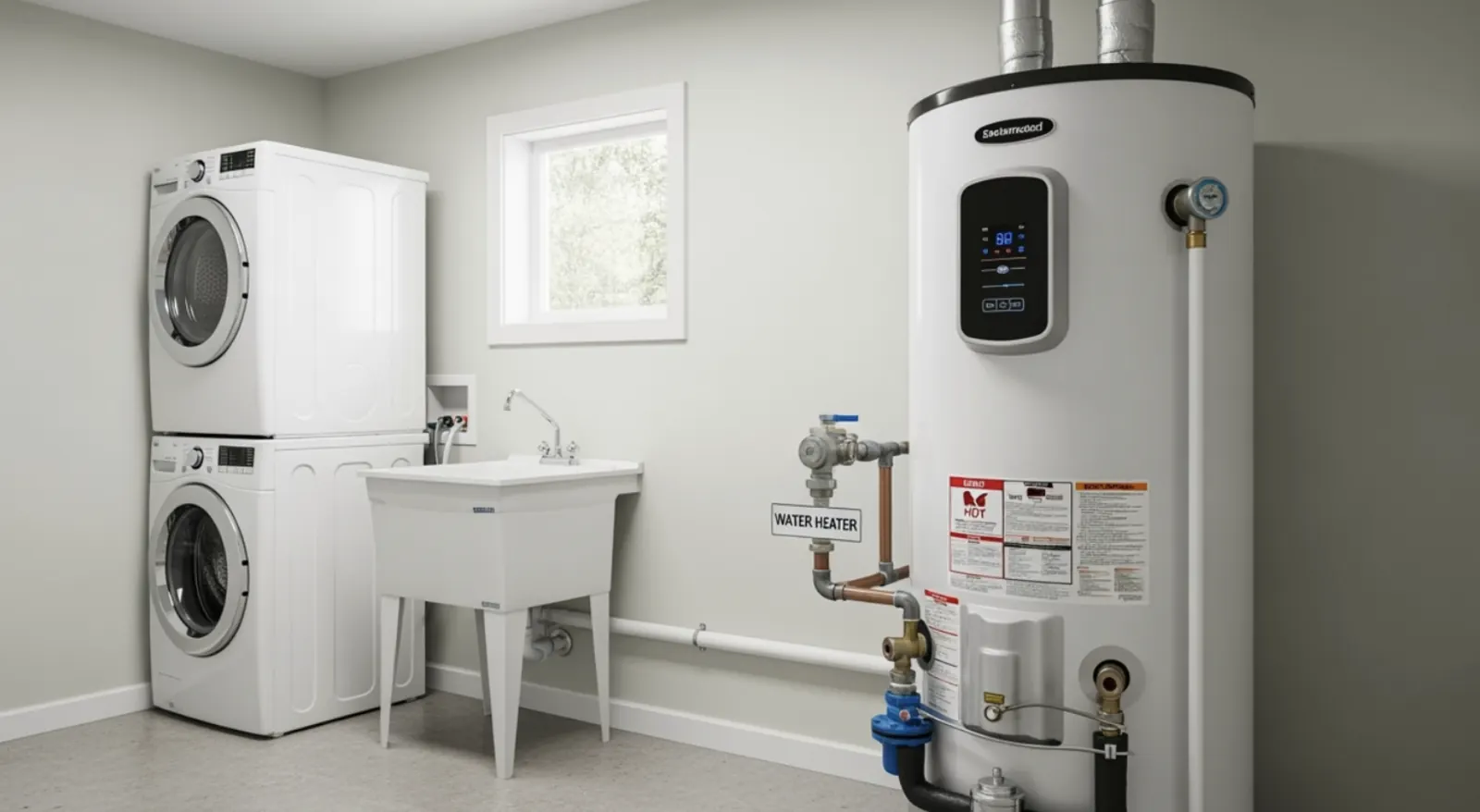
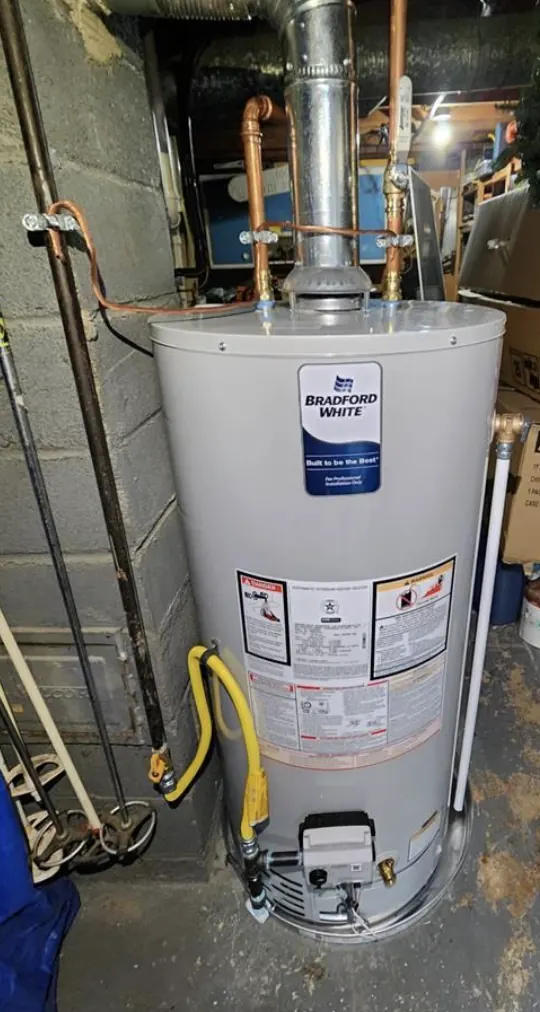
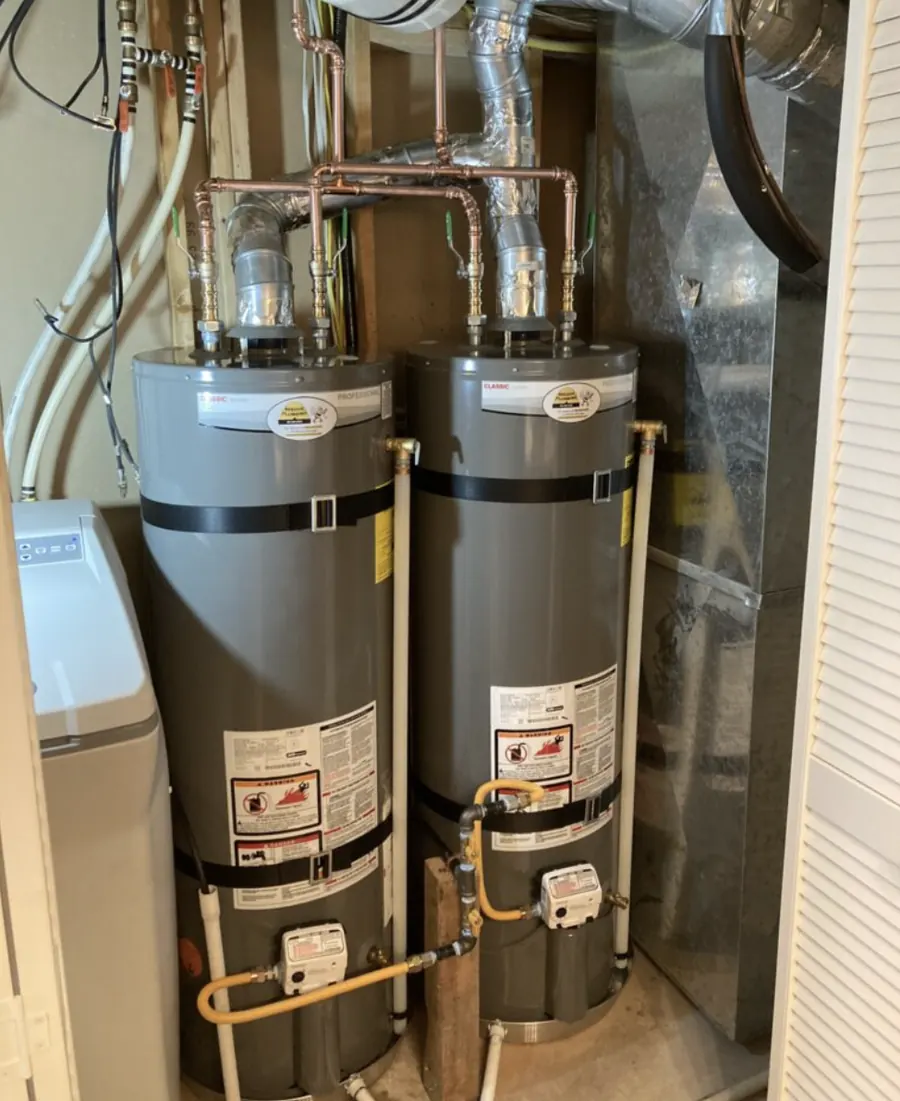
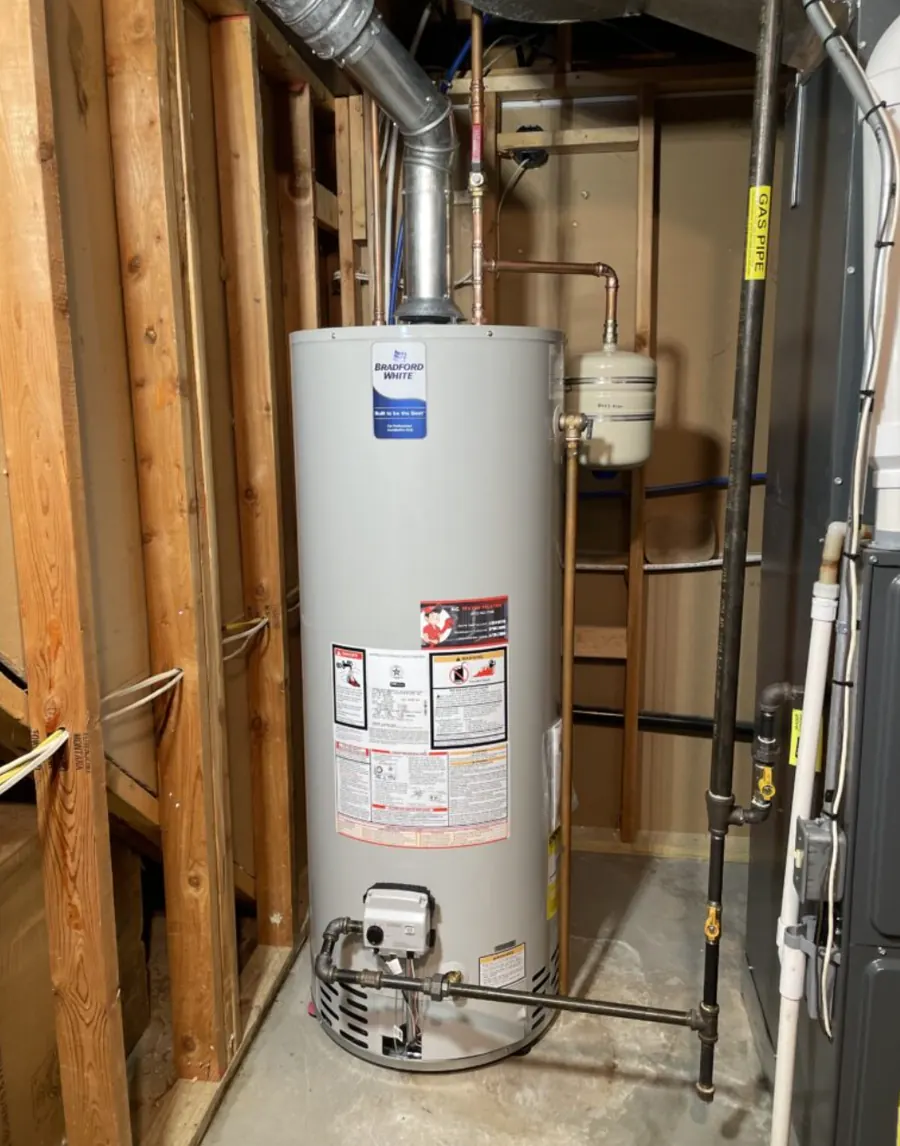
The housing stock matters too. Older homes around Hickory, Lenoir and Morganton often have heaters tucked into crawlspaces, basements or tight closets that were built around a smaller tank, and today's code can call for an expansion tank, a drain pan or a properly routed relief line that the original install never had. Newer subdivisions on the edges of Hickory, Conover and Newton and along the US 321 corridor tend to have better access but builder-grade units that reach the end of their life at about the same time. We plan every replacement around the space it has to fit into.
Getting to you is simple from Hickory. We run I-40 west to Valdese and Morganton, US 321 north to Granite Falls, Hudson and Lenoir, and NC 16 up through Conover to Taylorsville, so most of the four-county area is a straight shot rather than a long haul across back roads.
We work the way we would want someone to work in our own homes: explain what we found, show you the options, put the price in writing, and leave the utility room cleaner than we found it.