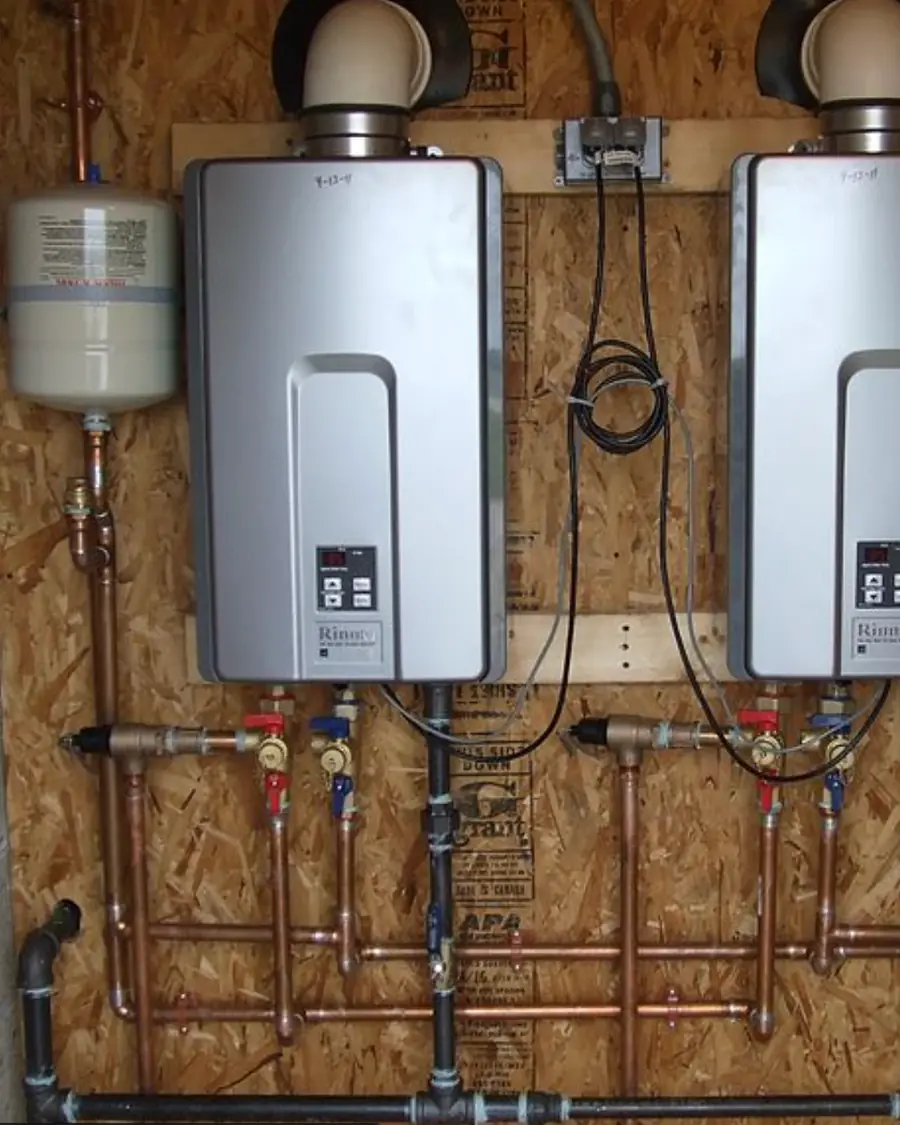
How a tankless water heater works
A tank water heater keeps 40, 50 or more gallons hot around the clock, whether anyone is using it or not. A tankless water heater does the opposite. It sits idle until you open a hot tap, then a flow sensor detects the demand, the burner or elements fire, and water is heated as it passes through a heat exchanger on its way to the fixture. When the tap closes, the heater shuts off.
That design has three practical results. First, there is no stored hot water to run out of, so back-to-back showers do not end in a cold rinse as long as the unit is sized correctly. Second, there is no standby heat loss from a tank sitting in a cold basement, which is where much of the energy savings comes from. Third, a wall-hung tankless unit frees up the floor space a tank used to occupy.
The tradeoff is that a tankless heater has a maximum flow rate at a given temperature rise. Ask it to heat more water than it can handle and the water gets cooler instead of running out. That is why sizing is the most important part of a tankless installation.
Is tankless worth it in the NC Foothills?
A tankless water heater can be a very good fit, but it is not the right answer for every home. It tends to make sense when:
- Your household runs out of hot water with a tank and a larger tank will not fit or is not practical.
- You want the floor space back in a closet, laundry room or garage.
- You plan to stay in the home long enough to recover the higher installation cost through lower standby energy use and a longer service life. Tankless units often last 15 to 20 years with regular descaling, compared with about 8 to 12 years for most tanks.
- Gas service is available or can be brought to the unit at a reasonable cost. Whole-house tankless heating in this area is usually gas or propane.
It tends to be a weaker fit when the gas line to the house is small and would need major work, when the installation location makes venting difficult, or when the household uses modest amounts of hot water and a standard tank already keeps up. We will tell you which side of that line your home falls on before recommending anything. If a tank makes more sense, our water heater replacement and installation page covers those options.
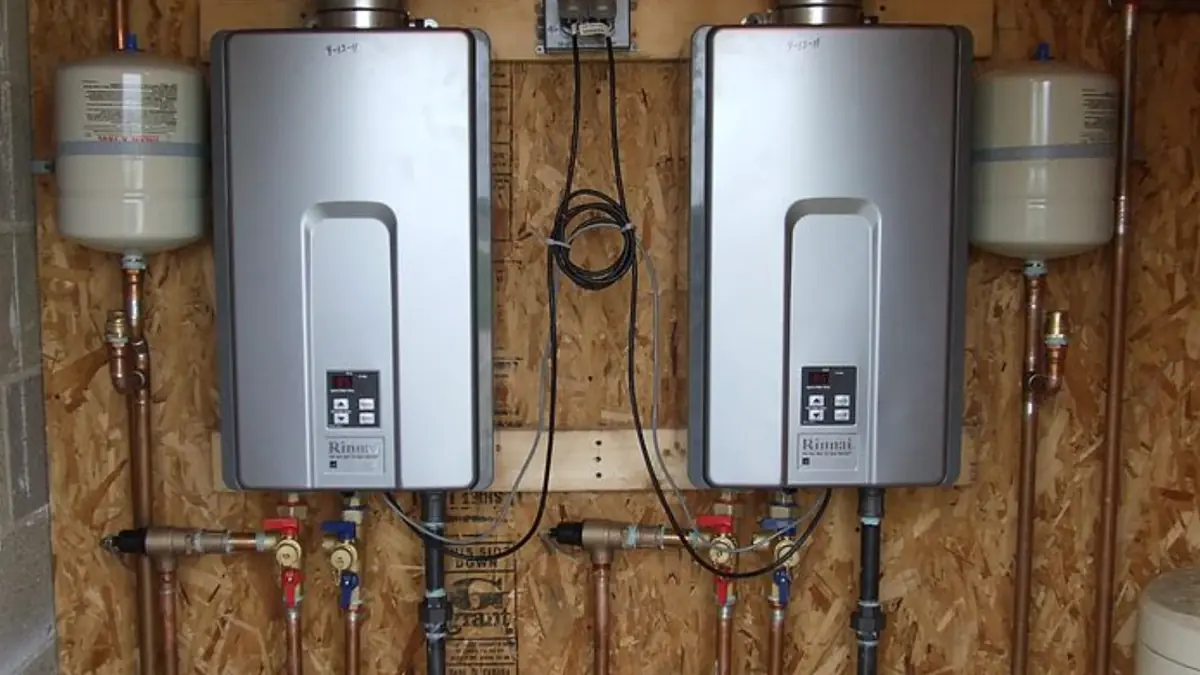
Sizing for Foothills winter water
Tankless sizing comes down to two numbers: how many gallons per minute of hot water your household uses at the same time, and how many degrees the heater has to raise the incoming water to reach the temperature you want.
The second number is where the Foothills matters. Incoming water in January is far colder than it is in August, whether it comes from the Catawba River system on city water or from a private well out in the county. A unit that looks big enough on a summer day can fall short on a winter morning when two showers and the kitchen sink are running at once. We size for the coldest month, not the average one.
To size a unit we look at:
- Fixtures that run together. Showers, tubs, the kitchen sink, the dishwasher and the washing machine, and which of them realistically overlap during your busiest hour.
- Flow rates of those fixtures. A rain head or multiple body sprays can use far more than a standard shower head.
- Winter temperature rise. The difference between the coldest incoming water and your set temperature.
- Fuel and input. Gas tankless units need a high gas input when they fire. The meter, the regulator and the pipe size from the meter to the heater all have to support it.
For larger homes, the answer is sometimes two tankless units piped together, which adds capacity and gives the house a backup if one unit ever needs service.
What a tank-to-tankless conversion involves
Switching from a tank to tankless is more than swapping one appliance for another. The heater moves from the floor to the wall, and three things around it usually change.
Gas line
A gas tank heater typically has a relatively modest gas input. A whole-house tankless unit needs considerably more at full fire. The existing half-inch line that fed the old tank is often too small for the new unit over any real distance, and an undersized line causes ignition problems, error codes and water that will not stay hot. We check the gas meter, the pipe size and the length of the run, and quote any gas line upgrade up front. Homes on propane need the tank, regulator and line checked in the same way.
Venting
Many tankless units cannot use the metal flue that served the old tank. Condensing models vent through PVC or polypropylene pipe and can often run out a side wall, which also opens up more options for where the heater can go. Non-condensing models use stainless or other approved vent material. Each manufacturer specifies vent materials, maximum lengths and clearances, and we follow them exactly.
Water, condensate and electrical
We install isolation valves on the hot and cold connections so the unit can be flushed and descaled without disturbing the rest of the plumbing, along with the relief valve the manufacturer requires. Condensing units need a condensate drain, usually with a neutralizer so the acidic condensate does not damage the drain. Most tankless units also need a nearby electrical outlet for their controls and fan. We often add a sediment filter on the cold inlet, which is especially helpful on well water.
What tankless installation costs
In the Hickory area, a tankless conversion commonly runs $3,500 to $6,000 or more when the gas line or venting needs work. Where your home falls in that range depends on the unit size, the length and size of the gas line upgrade, how the unit will be vented, whether a condensate drain and electrical outlet are needed, and how much the plumbing has to move. Replacing an existing tankless unit with a new one is usually simpler, because the gas line, venting and connections are already in place.
We do not guess at tankless pricing over the phone. We look at the gas meter, the gas line, the location and the venting route, then give you a written, itemized quote that lists the unit, labor, permit, gas and venting work, and haul-away of the old tank. If a standard tank makes more sense for your budget, we will quote that too so you can compare.
Tankless brands we install and service
We install and service the major residential tankless brands, including Rinnai, Navien and Noritz. Each has its own error codes, venting requirements and maintenance schedule, and we follow the manufacturer's installation instructions on every job. Installing exactly to those instructions matters for performance, for safety and for keeping the manufacturer's warranty on the unit intact.
Descaling and tankless maintenance
The one habit that decides how long a tankless heater lasts is descaling. Minerals in the water collect on the inside of the heat exchanger. As scale builds up, the unit loses efficiency, throws error codes, and in time can overheat the exchanger. Hard water and well water, both common in parts of Alexander, Caldwell and Burke Counties, speed that process up.
A descaling service uses a small pump to circulate a cleaning solution through the heat exchanger through the isolation valves, then flushes it clean. At the same visit we clean the inlet filter, check the venting and condensate drain, and read the unit's error history. Once a year is a sensible starting point, and homes with harder water may need it more often.
We also repair tankless heaters that are already installed: ignition and flame-sensing faults, flow sensor problems, blocked condensate drains and units that cycle or deliver water that swings between hot and cold. Our water heater repair page covers those calls in more detail.
Recirculation: hot water faster at the tap
Tankless heaters make endless hot water, but they do not make it arrive at a distant bathroom any faster. The water sitting in the pipes still has to clear first. Some units have a built-in recirculation pump, and others can be paired with an external pump or a return line so hot water reaches the fixture sooner. Whether recirculation makes sense depends on the layout of the home and how far the heater sits from the busiest bathrooms, and we will talk through it during the estimate.
Tankless installation across the Foothills
From our base in Hickory we install and service tankless water heaters throughout Catawba, Caldwell, Alexander and Burke Counties, including Hickory, Conover, Newton, Claremont, Maiden, Lenoir, Granite Falls, Hudson, Sawmills, Cajah's Mountain, Taylorsville, Hiddenite, Stony Point, Bethlehem, Ellendale, Morganton, Valdese, Drexel, Hildebran and Connelly Springs. Call (828) 471-7706 or request a quote below, and see the full service area for details.